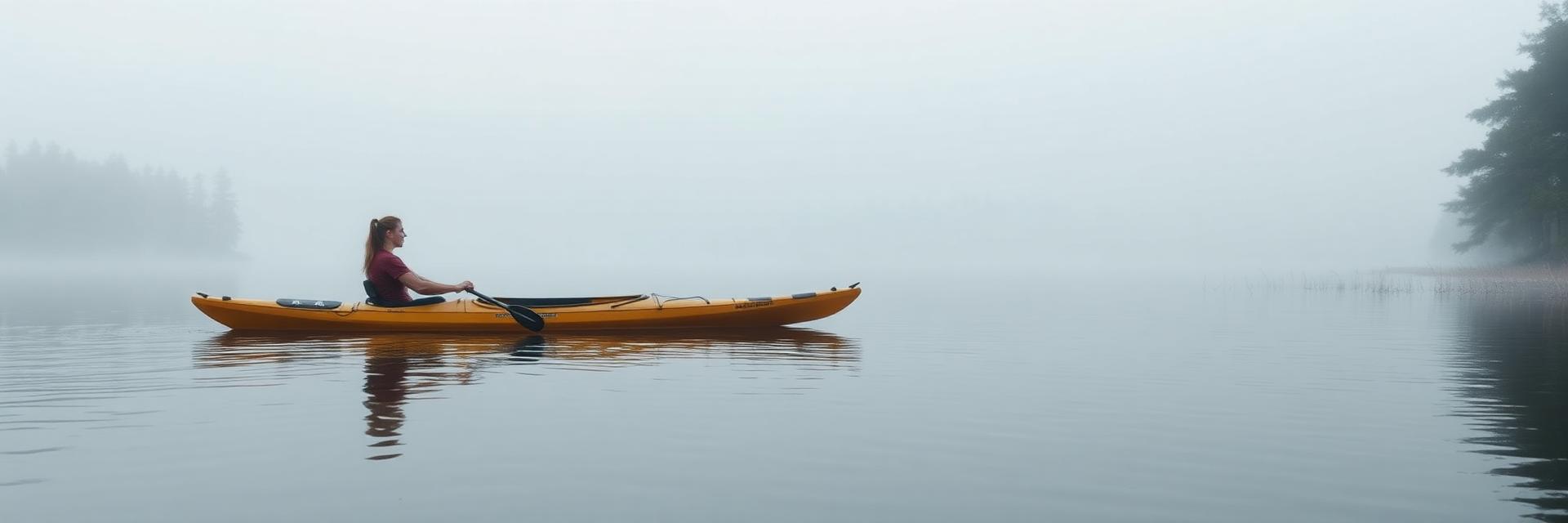

A lake twenty miles inland from Lake Michigan faces most of what Lake Michigan faces. It just faces it alone.
People ask why Lake Pulse does not work on the Great Lakes. It is a fair question and the answer is not modesty. It is that the Great Lakes are, by any reasonable measure, already the most watched fresh water on earth — and the lakes we built for are among the least.
Respect where it is owed
Superior, Michigan, Huron, Erie, and Ontario are studied by federal agencies, state and provincial governments, tribal nations, universities, and binational commissions, with decades of expertise and billions of dollars behind them. Nutrient loading, harmful algal blooms, invasive species, climate-driven changes in temperature and circulation — the science on these systems is deep, sustained, and genuinely world-class.
That work protects drinking water for tens of millions of people and underpins entire regional economies. Much of what the rest of us understand about how large lakes behave came out of it. The methods we rely on, the thresholds we cite, the understanding of how phosphorus moves through a stratified water body — a great deal of that was worked out on the Great Lakes and then handed to everyone else.
We are not competing with that. We are downstream of it.
Why we did not build for them
The Great Lakes are binational, heavily regulated, politically intricate, scientifically dense, and supported by overlapping agencies with real budgets. That density is a strength. It also means there is very little unmet need at the lake-wide scale for a platform like ours.
Put plainly: the Great Lakes are busy. The gap is not there.
Where the gap actually is
Lake Pulse was built for water bodies roughly 20 acres to 250,000 acres — the overwhelming majority of lakes in this country. The ones people swim in, fish, draw drinking water from, and build communities around.
These lakes make decisions with limited data, infrequent sampling, fragmented history, and volunteer-led budgets. Most will never have a dedicated scientific team or a funded long-term monitoring program. Not because they matter less to the people on them — they are often the entire local economy — but because there is no agency whose mandate covers them and no budget line with their name on it.
Consider the comparison directly. A 400-acre lake twenty miles inland from Lake Michigan faces nutrient runoff, warming water, earlier blooms, and shoreline development pressure. So does Lake Michigan. Lake Michigan has international agreements, federal programs, university research stations, and continuous monitoring. The 400-acre lake has a board, a spreadsheet, and whoever volunteers to take the Secchi readings.
Same physics. Same chemistry. Radically different infrastructure.
What we borrowed
Nearly everything methodological. Stratification and turnover dynamics, the relationship between phosphorus and algal biomass, oxygen depletion in the hypolimnion, the value of long-term continuous records over episodic sampling — the Great Lakes research community established or refined most of this.
The single most important thing we took is the least technical: the understanding that a long, boring, uninterrupted record beats a brilliant one-off study. Erie's story is only legible because someone kept measuring through the decades when it was recovering and the decades when it was not. That is the discipline we are trying to make affordable for a lake with a volunteer board.
An open door
We would like to collaborate rather than sit adjacent. Small inland lakes are part of the same watersheds, contribute to the same downstream loads, and function as an enormous distributed sensor network that mostly is not being read.
If you work on the Great Lakes and there is a question that inland lake data could help answer, we would genuinely like to hear it. The lakes we serve are the ones between the monitored ones, and that gap is where a lot of the interesting signal is hiding.
Different customer. Same water. We would rather be useful to you than invisible.