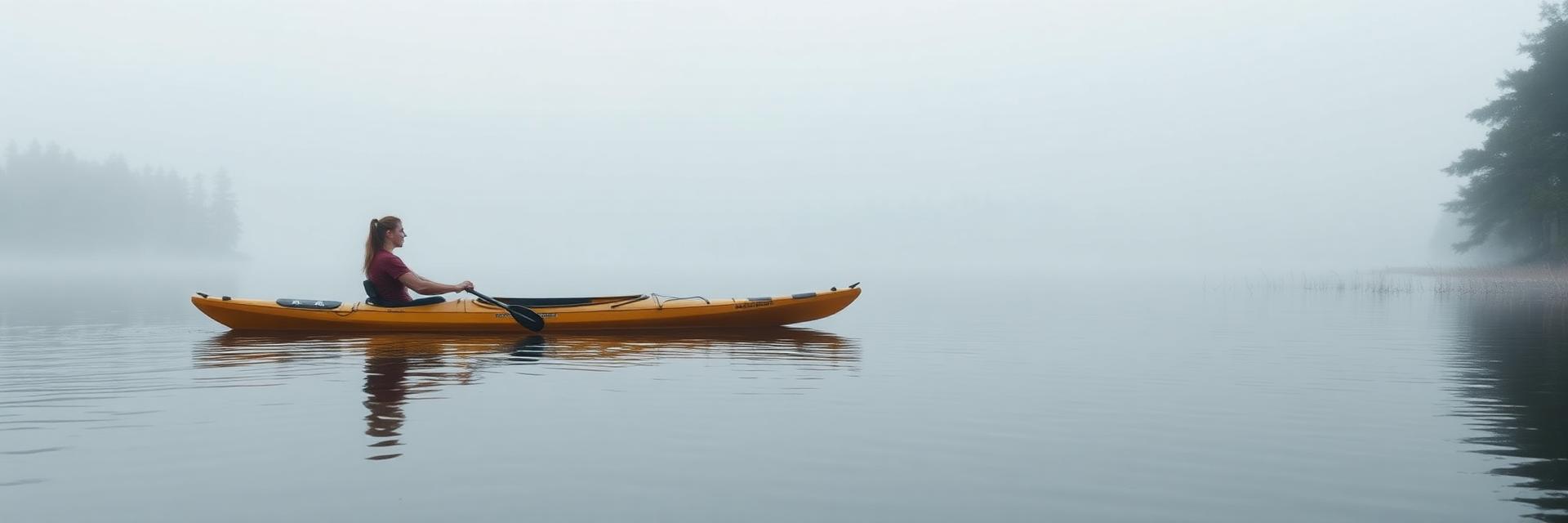

Every lake keeps a record of the people who live around it. Most of what goes into that record is ordinary: a mowed lawn, a boat ride, a flush. None of it looks like harm in the moment. Added up across a shoreline and a few decades, it is the single biggest driver of a lake's health and safety.
Here are the ten most common ways lake communities change their lakes, and the Toolbox solutions that help you see it, measure it, and manage it.
1. The Sunset Cruise
Your boat leaves more than a wake.
Gas engines release small amounts of unburned fuel and oil into the water, especially older two-stroke motors. Spills at the dock and during refueling add more. A single drop disappears; a summer of drops from a busy lake does not.
What helps: maintain your engine, refuel on land or with a spill collar, keep absorbent pads on board, and consider four-stroke or electric power for your next motor.
From the Toolbox:
- Basic Lake Test for a baseline on overall water condition near busy docks and launches.
- WakeCheck to understand how boating activity is affecting your lake.
- Lake Sentinel Buoy to watch turbidity and water temperature continuously through the boating season.
2. The Perfect Lawn
Green grass, green water.
Fertilizer that feeds your lawn feeds the lake too. Rain carries phosphorus and nitrogen downhill, where they fuel algal blooms and dense weed growth. One pound of phosphorus can grow hundreds of pounds of algae.
What helps: use phosphorus-free fertilizer (or none), never fertilize before a rain, and keep a strip of unmowed vegetation along the water.
From the Toolbox:
- ClarityCheck to track the nutrients and clarity changes that follow runoff.
- RunoffCheck to see what is washing into the lake after storms.
- Secchi disk for a simple, repeatable clarity reading you can take from your dock.
- Algal bloom view (Satellite) to watch bloom activity across the whole lake.
3. Out of Sight, Out of Mind
When was your septic last inspected?
A working septic system is a remarkable piece of engineering. A failing one leaks bacteria and nutrients into groundwater that flows straight to the lake. Older systems on small lakefront lots are the most common culprits, and most owners have no idea theirs is leaking.
What helps: pump and inspect every three to five years, keep heavy vehicles off the drain field, and never flush wipes, grease, or chemicals.
From the Toolbox:
- SwimCheck to check bacteria at swimming areas and shorelines.
- Water Table Watch to monitor groundwater levels that affect how septic systems drain.
- ClarityCheck to catch the nutrient increases that often follow septic leaks.
4. The Manicured Edge
A clean shoreline is an unprotected one.
Native plants, fallen trees, and tall grass along the water filter runoff, hold soil in place, and shelter fish, frogs, and birds. Replace them with lawn, sand, or a seawall and the lake loses its first line of defense.
What helps: keep or restore a buffer of native plants at the water's edge, leave woody debris in the shallows, and choose natural shoreline stabilization over hard walls.
From the Toolbox:
- PlantCheck to understand what is growing along and in your shoreline.
- Aerial drone survey to document shoreline condition and change over time.
- Lake Census (eDNA) to see which species are present in your lake.
5. Leaves on the Water
Fall cleanup can become summer algae.
Leaves and grass clippings blown or raked into the lake break down and release phosphorus. That nutrient settles into the sediment and feeds algae for seasons to come.
What helps: compost leaves and clippings away from the water, mulch them into the lawn, and keep them out of ditches and storm drains.
From the Toolbox:
- ClarityCheck to track nutrients and clarity season over season.
- BloomCheck to identify what is blooming when it appears.
- Turbidity/sediment view (Satellite) to see sediment patterns across the lake.
6. Big Wakes, Shallow Water
Where does that wave end up?
Wake boats and high-speed passes in shallow water churn up bottom sediment and pound the shoreline. Stirred-up sediment releases stored nutrients, clouds the water, and uproots native plants. Eroded banks wash in behind it.
What helps: keep wake sports in deep water and well away from shore, respect no-wake zones, and slow down near docks, swimmers, and shallow bays.
From the Toolbox:
- WakeCheck to measure how wake activity is affecting your lake.
- Bathymetry survey to map depth and show where shallow water needs protection.
- Lake Sentinel Buoy to record turbidity spikes during peak boating hours.
7. Uninvited Guests
Did something come home on your trailer?
Zebra mussels, milfoil, and dozens of other invasive species travel between lakes on boats, trailers, waders, and bait buckets. Once established, they are nearly impossible to remove and can reshape a lake's ecosystem within a few years.
What helps: clean, drain, and dry every boat and piece of gear before moving between lakes, never release bait or aquarium life, and report anything unfamiliar.
From the Toolbox:
- Species Watch (targeted eDNA) to look for specific invasive species before they spread.
- Lake Census (eDNA) for a broad survey of what lives in your lake.
- Live Watch (targeted eRNA) to check whether a detected species is active now.
- Lake Tag so neighbors can log sightings from the water with a single click.
8. Feeding the Geese
A friendly gesture with a messy result.
Feeding waterfowl draws large flocks that stay longer and leave behind bacteria and nutrients. Pet waste left near the shore washes in with the next rain. Both raise bacteria levels at the places people swim.
What helps: don't feed geese or ducks, let shoreline plants grow tall (geese avoid them), and pick up after pets, especially near the water.
From the Toolbox:
- SwimCheck to check bacteria levels at beaches and swimming areas.
- Basic Lake Test for a baseline on overall water condition.
- Lake Tag so neighbors can log goose flocks and problem spots from the water.
9. Paved Paradise
Where does your rain go?
Roofs, driveways, patios, and roads shed rain instead of soaking it up. That water rushes to the lake carrying sediment, nutrients, oil, and debris, often in a single pulse after a storm. More pavement around a lake means dirtier, faster runoff.
What helps: add rain gardens and rain barrels, direct downspouts onto grass, choose permeable surfaces for new paths and patios, and keep storm drains clear.
From the Toolbox:
- RunoffCheck to measure what storms are carrying into the lake.
- Lakewide Weather Station to connect rainfall events to changes in the water.
- Lake level sensor to see how quickly storms raise the lake.
10. The Chemical Cabinet
Weed killer, bug spray, road salt: where do they end up?
Herbicides, pesticides, and winter de-icing salt don't stay where they're applied. They wash into the lake, where they can harm aquatic plants, insects, fish, and amphibians. Salt builds up year after year and doesn't break down.
What helps: spray less and only where needed, never apply before rain or near the water, use sand or salt alternatives on driveways, and dispose of household chemicals at a collection site.
From the Toolbox:
- Herbicides Test to screen for common weed killers in your water.
- Pesticide Detection Test to check for insecticides and related compounds.
- Chloride (Road Salt) Test to track salt buildup over time.
- Golf Course Impact if a course sits on or near your lake.
Lakes Get Sick the Way People Do
Quietly at first, then all at once.
A lake rarely goes from healthy to impaired overnight. Like human health, the decline starts unnoticed: a little more phosphorus, slightly cloudier water, a new plant in the shallows. Then come the symptoms, such as a bloom, a beach closure, or a weed bed that wasn't there last summer. By the time everyone can see the problem, treatment is slower, costlier, and less certain.
Testing and monitoring are the lake's checkup. Regular measurements show you which of these ten habits are affecting your water, how much, and whether the changes you make are working.
Start the conversation. Share this list with your neighbors and your association. Pick the habits that matter most on your lake, use Lake Pulse to build a plan for each one, and track your progress season over season. If you don't know where to start, PulseCheck gives you a baseline for your whole lake.
As long as people live on and near lakes, there will be impact. Lake Pulse exists to help you and your neighbors see it clearly and keep it as small as possible, so the lake you love stays healthy and safe for the next generation.