ToolboxLab TestingSpecies Watch (Targeted eDNA Assay)
Snakehead s are invasive to North American lakes.
Lab Testing

Species Watch (Targeted eDNA Assay)

One species, one question: is it here yet?

$350

One target species per kit. Not sure? Pick the invasive already found in nearby or connected lakes, or ask the Boathouse.

The Boathouse confirms every target against the lab's validated assays before your kit ships.

Name one target species above to add this assay to your cart.

Overview

A Lake Census casts the widest net. Species Watch does the opposite: it looks for the DNA of one named species, using a targeted qPCR assay designed for that species alone. Narrowing the question is what makes it more sensitive — it can pick up a species at levels a broad survey is likely to miss.

That makes it the tool for the moment that matters most in invasive-species management: the early window, when a species has arrived but is still rare, localized, and invisible. Found then, it can sometimes still be removed. Found later, it usually can't.

Choose the target from your watch list — the invasives already established in nearby and connected waters — and sample where they would arrive: the boat launch and the main inlet. Collection uses the same syringe-and-filter kit as the Lake Census, roughly five minutes per sample, shipped at room temperature.

Every result goes into your lake's record, including non-detections. A documented, repeated non-detection at your launch is real evidence, and it is the baseline an arrival is measured against.

One of four genetic tests. “Census” reads the whole community; “Watch” looks for one named species. Lake Census and Species Watch read DNA; the two “Live” tests read RNA, which only living, active organisms produce.

  • Lake Census — DNA, broad: what lives here?
  • Species Watch — DNA, one species: is it here yet?
  • Live Census — RNA, broad: what is alive and active right now?
  • Live Watch — RNA, one species: is it alive and active here now?

Most lakes should start broad and narrow down: census first, then watch, then confirm. Which genetic test should your lake start with?

Note on methodology: eDNA analysis is not an EPA-approved method. It is a survey and screening tool, and results are not suitable for regulatory or compliance use.
What's detected & how

1 target · Targeted species eDNA assay (qPCR)

  • One target species, selected at checkout
    What's reported:
    Detected / Not detected; number of positive laboratory replicates

You get

  • Target species result in your lake's Flora & Fauna
  • Laboratory report in Documents & Reports

How it's produced

Test type
Targeted species eDNA assay (qPCR)
Analyzed by
Genetic partner laboratory
Method
Targeted qPCR assay for the selected species
Limit of detection
Reported only when the laboratory provides it
Method basis
Peer-reviewed molecular method; not EPA-approved
Sample
One filtered water sample (syringe kit, about 1 litre), collected by you
Product category
  • Physical ProductShips to you
  • ConsumableLab testing
  • ServiceBy the Lake Pulse Boathouse
  • Availability

    Kit ships in 2 business days

  • Shipping

    Flat-rate to your front door. Shipping details

  • SKU

    LP-TINV-001

Example result

Example result

Not detected

Not proof of absence.

0 of the laboratory replicates positive. Not proof the species is absent

Turnaround

Results are available within 10 business days of the lab receiving your sample.

What problem does this solve for our lake?

  • Invasive species management has a narrow window and most lakes miss it. By the time zebra mussels are visible on a dock post or hydrilla is fouling a propeller, the population is established, the cost of response has multiplied, and eradication has usually stopped being a realistic goal. Everything after that point is containment.
  • The window exists because organisms shed DNA into the water long before they are dense enough to be noticed. A targeted eDNA assay amplifies a species-specific genetic marker from a filtered water sample, and it will detect a population far below what netting, angling, or a visual survey can find. That is the difference between a management problem and a management crisis.
  • It is also the test that answers a board's most common invasive-species question, which is not "what is in our lake" but "is *that* thing here yet." A full biodiversity survey is the right tool for the first question. This is the right tool — faster, cheaper, and unambiguous — for the second.

What's included?

  • One (1) complete eDNA sampling kit for one location
  • All materials required for clean, contamination-free sample collection, including an encapsulated filter and preservation buffer
  • Step-by-step collection and preservation instructions, also printed on the sample bag
  • Shipping to our partner genomics laboratory, with full chain of custody
  • Laboratory analysis by species-specific qPCR for one target species, named at order and confirmed against the lab's validated assays
  • A lab report stating detected or not detected, with the number of positive laboratory replicates
  • Results loaded into your lake's account
  • Note on methodology: targeted eDNA analysis does not run an EPA-approved method. It is a screening tool, and results are not suitable for regulatory or compliance use.

What's not included

  • Sample collection. You collect the sample; we supply everything you need to do it correctly.
  • Any species other than the one named at order. For a list of everything present, order a Lake Census.
  • Species without a validated assay. The Boathouse will confirm your target before you order.
  • Abundance or population estimates
  • Confirmation that a detection represents a living, active population. That is what Live Watch is for.
  • Proof of absence. A non-detection means the species was not detected in this sample, at this place and time.
  • Regulatory or compliance determinations, including official invasive-species reporting

Requirements

  • Gloves worn for every sample, and a fresh filter per site — cross-contamination is the main way an eDNA sample is spoiled
  • Roughly 1 litre pushed through each filter, or until the filter clogs, whichever comes first
  • A target species chosen from your watch list, confirmed with the Boathouse against the lab's validated assays
  • A sampling site where the species would arrive — usually the main boat launch or inlet
  • Coordinates and site details recorded for each sample, and the online submission form completed
  • A printed, signed chain of custody form sent with the samples
  • Samples kept out of direct sunlight and heat before shipping, though refrigeration is not required
  • A Plus, Lake Admin, or PRO subscription to have results loaded into your Lake Pulse account
  • Questions about site selection, timing, or which genetic test fits your lake? Contact the Lake Pulse Boathouse before you order.
What you get back

Results

  • A clear result for your target species: detected or not detected, with the number of positive laboratory replicates
  • A dated entry in your lake's invasive-species record, including non-detections
  • Interpreted results are found in Flora & Fauna in the Lake Pulse Portal
  • The signed lab report is filed in Documents & Reports
  • Results are found in your lake's portal, accessible only to Plus, Lake Admin, and PRO subscription tiers

Pro tips

  • Test for what is nearby, not what is in the news. Your realistic threats are the species already one lake away.
  • Sample more than once a season. One negative is weak evidence; early, mid, and late season at the launch is a sensible rhythm for high-risk lakes.
  • Keep the same site and window year to year. A record of repeated non-detection is what makes a first detection meaningful.
  • A positive is a reason to resample, not to announce. Confirm at the same site and nearby, then consider Live Watch to learn whether the organism is alive and active.
  • Report confirmed detections to your state agency. Many states require it, and agencies often help with the response.
  • Call the Boathouse before announcing anything. An invasive-species announcement moves shoreline property conversations immediately.
Results sync to the Portal for Plus, Lake Admin, and PRO subscribers

Results from this product land in your lake's shared record in the Portal — next to everything else your lake has ever measured, instead of in an inbox.

Compare subscriptions

About these results

Every result shows the date and time each sample was collected. eDNA and eRNA detect genetic material, not organisms directly. DNA can persist after an organism has left or died, and can arrive from upstream or on boats, birds, or bait. Read counts reflect relative genetic signal, not the number, size, or biomass of organisms. Species names depend on reference-library coverage; some detections resolve only to genus or family. A detection is evidence to follow up, not confirmation that a population is established, and a non-detection does not prove absence. These are not EPA-approved methods and are not a regulatory determination. Results can help you make decisions about safe swimming and water use, but no result is definitive for every place and time. It is always good practice to check posted signs and your state or local health authorities.

Questions on this?

Our team can help you choose the right solution for your lake, explain how results sync to your Portal, or point you to the right subscription.

Same aisle

More in Lab Testing.

See all

Live Census (eRNA Activity Survey)

Measures: RNA of the living, active community, Functional activity (stress response, toxin-gene expression)

Turnaround: Results are available in 15 - 20 business days of the lab receiving your samples.

Kits ship in 2 business days

$3,000

View

Phosphorus Fractionation Sediment Test

Measures: Total Phosphorus, Loosely bound phosphorus, Iron-bound phosphorus +7 more

Turnaround: Results are available within 10 business days of the lab receiving your sample.

Kit ships in 2 business days

$434

View

Nitrogen Sequence Surface Water Test

Measures: Nitrate, Ammonia, Total Kjeldahl Nitrogen (TKN)

Turnaround: Results are available within 5 business days of the lab receiving your sample.

Kit ships in 2 business days

$225

View
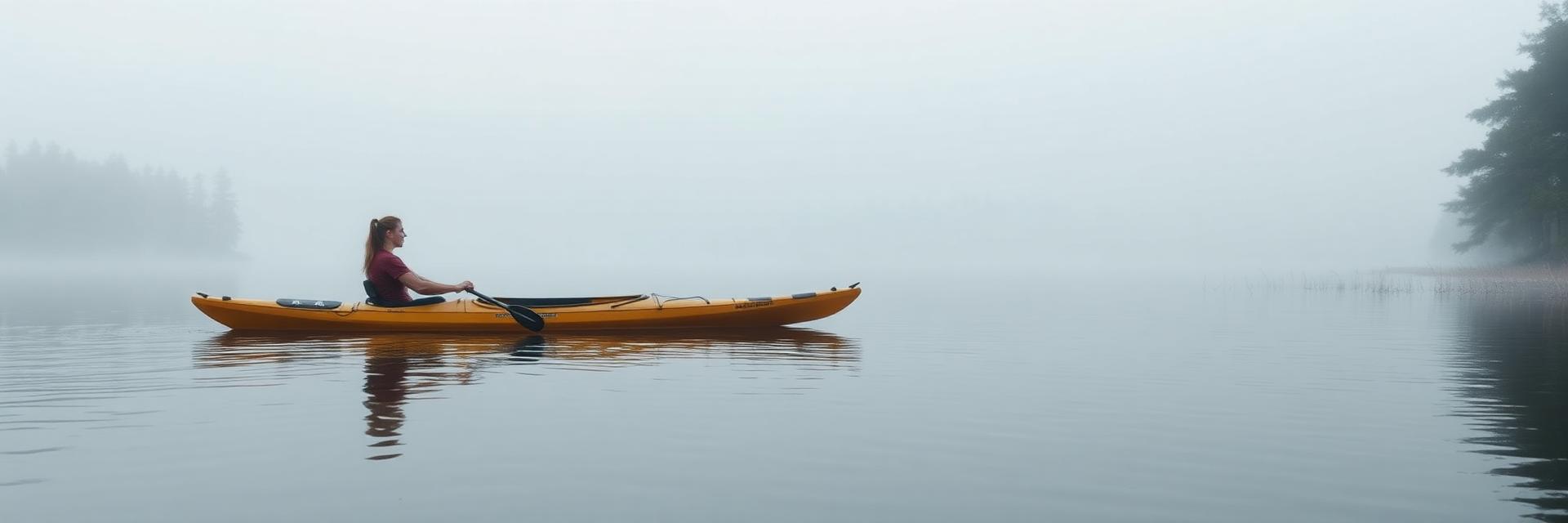
A woman paddling a kayak alone across a misty morning lake

Lake Pulse

Every lake deserves a permanent record. Yours can start this morning.

Get started