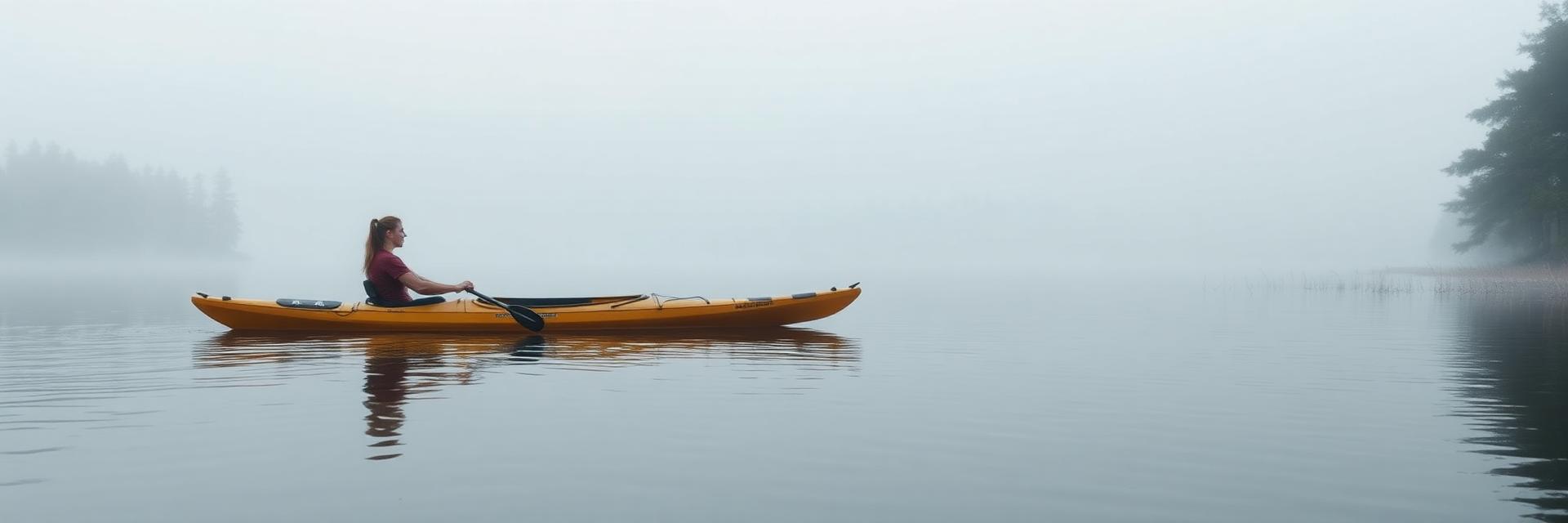

The water at the public landing and the water in the quiet cove are not the same lake, and no single grade can tell you that.
There is a version of this business that would be much easier to explain. Give every lake a score out of ten. Put it on a dashboard, color it green or red, let people compare against the lake down the road. People love a number.
We will not do it, and the reason is not caution. It is that the number would be wrong.
What a lake actually is
A lake is not a body of water. It is several bodies of water that happen to touch.
The public boat landing has traffic, disturbance, whatever arrives on trailers, and runoff from the parking lot. A shallow bay at the inlet gets the watershed's first delivery of nutrients and warms weeks earlier. A deep basin stratifies in June and holds a cold, dark, increasingly oxygen-starved layer at the bottom until autumn. A quiet cove seventeen miles up the shore might as well be a different water body — slower flush, different plants, different problems.
Average those together and you get a number that is true of no location on your lake. Worse, averages hide exactly what you need to find. A cove with a serious bloom disappears into a lake that is broadly fine. And a cove is often where the highest-value shoreline is.
Season does the same thing
Your lake in May and your lake in August are different systems. May is well-mixed, cold, and usually clear. August is stratified, warm at the top, potentially anoxic at the bottom, and running whatever biology the spring nutrients paid for.
A single annual figure blends those into a fiction. The useful question is never "how is the lake." It is "how is this part of the lake, in this season, compared to the same part in the same season last year."
What we do instead
We record by place and by season and we keep them separate. Your Portal holds a timeline per location, not a verdict. When you look at your lake, you should see where things are diverging — which bay is changing, which season is shifting, which depth is losing oxygen — rather than a color.
It is more work to read. It is also the only version that tells you where to act.
The uncomfortable part
Refusing to grade lakes costs us something. A score is shareable, competitive, and easy to put in a headline. "Your lake is a 7" spreads. "Your lake's north bay shows declining clarity in August across four seasons" does not.
But the second one is actionable and the first one is decoration. And a grade invites the worst conversation in lake management — comparing yourself to a neighboring lake with a different watershed, depth, and history, as though they were sitting the same exam.
Your lake is not competing with anything. It is only ever compared to itself, last year.